Great Service Starts With Clear Communication

Scenes from Support: Angry Anna from Accounting & the Workplace Pressure Cooker
A bad morning. A missed lunch. An angry coworker demanding help. What happens when workplace stress builds like a pressure cooker—and what can we do before the lid blows?
WORKPLACE COMMUNICATIONCUSTOMER INTERACTIONS
Erin (Air) Duba - Founder, Open Door Consulting, LLC
3/15/20262 min read
The day started out rough.
You woke up late, spilled your much needed coffee and argued with a loved one all before walking out the door. Your 25 minute commute turns into 60 as you sit in unexpected traffic…allowing more than enough time for your anger to build as you ruminate on the events of the morning.
By the time you arrive at work late, your manager greets you with disappointment. The incessant text notifications you ignored in the car? They are about the major system outage that you need to address…right away…because there’s a VIP breathing down his neck asking for an ETTR.
A few hours later, the urgent issue is resolved, but now you’re hangry (hungry-angry) and can’t do anything about it because Angry Anna from Accounting is standing in your office demanding help…NOW!
Anna has a reputation for being difficult to work with, and in this moment your patience has worn thin.
You snap and tell Angry Anna exactly what she can do with her laptop.
This will NOT go down as one of your finest support moments
I recently saw an infographic on LinkedIn called “How to Process Emotions As A Leader” by Cicely Simpson. It described how unprocessed stress can accumulate throughout the day and often surfaces in later interactions.
While the focus was on leadership behavior, it struck me how the same emotional carryover often occurs in so many facets of our life, including customer-facing support environments.
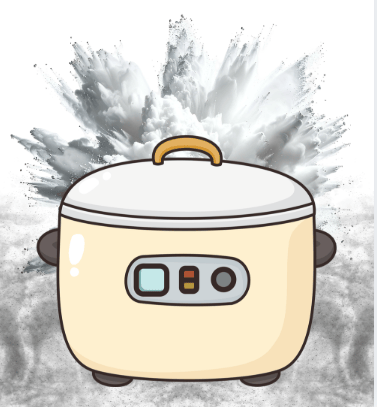
When we finally snap, the “final straw” is often something that we could have handled with professionalism and grace the day before. The difference is that today we’re the human equivalent of a pressure cooker - building pressure through the day until you burst.
Anyone that has used a pressure cooker knows that it is dangerous to open the pressure cooker before releasing the pressure. Humans are no different.
If we don’t release the pressure along the way, something will eventually force the lid off
What if the commute had gone differently?
Instead of ruminating on the events of the morning, imagine taking a moment to identify what you’re actually feeling. Maybe there’s frustration that you woke up late and had to rush around leading to the coffee spill? If those things had not happened would the conversation with your loved one have escalated the way it did?
Identifying the underlying emotion and its true cause will help you see the situation more clearly. Instead of fueling your frustration, your commute gives you the opportunity to reset and start the day with a clean slate.
Bad days are going to happen.
But frustration compounds quickly when we allow the pressure to build unchecked. By the time Angry Anna from Accounting shows up, the real cause of our reaction may have nothing to do with her at all.
It may trace all the way back to spilling coffee before we even left the house.
Emotional regulation isn’t just personal development - it’s part of professional service delivery. Every interaction shapes how customers experience your services or products.
The question is: what kind of experience will they remember?
As new challenges pop up through the day, keep returning to the process:
Identify the emotion
Determine the real cause (not just the current situation)
Take a moment to reset before the next interaction
Maybe you’re angry at yourself and projecting it on to the next person that crosses your path
...
The 30-Second Reset
Pause before responding
Take one slow breath
Ask: "What's really driving my reaction right now?"
Choose a response you will be proud of later
© 2026 Open Door Consulting, LLC. All rights reserved.
Team Communication Support
Workforce Workshop
1:1 Communication Coaching